Customer success story
Building a frontline learning ecosystem with Circle K
Everyone was completing the training, but nothing was improving. Here's how Circle K rebuilt frontline learning across 14,000 stores – and tied it to what happens on the shop floor.
 85%
85%of staff reported that the training made them better at their job
 85,000
associates trained globally
87%improvement in knowledge score
 14,000
stores across 26 countries
The challenge
Training that reached everyone, and changed nothing
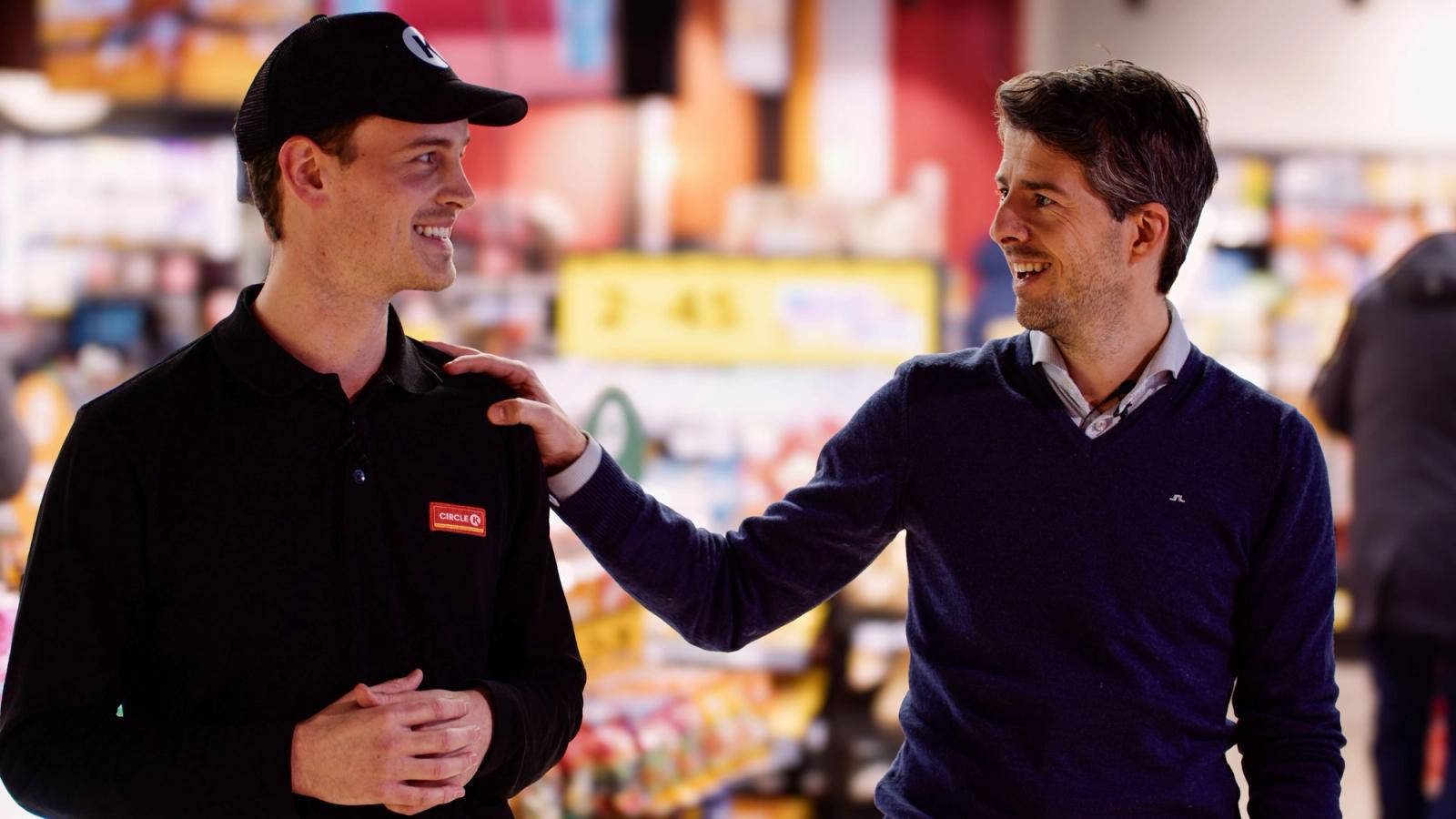
Circle K is one of the world's largest convenience and fuel retail brands, with nearly 150,000 employees serving customers across 14,000 stores, on a mission to make their lives "a little easier every day."
Circle K had grown through acquisitions, and training had grown with it – locally, inconsistently, and without much visibility. Employees were completing e-learning, but customer satisfaction scores weren't moving and new hires weren't staying.
With store teams of 10–15 people, high turnover, mostly entry-level roles, and training delivered by thousands of local managers rather than a central function, consistency was hard to sustain and field leaders had no reliable way to see what had been completed, let alone applied.
The solution
From one pilot to a learning ecosystem
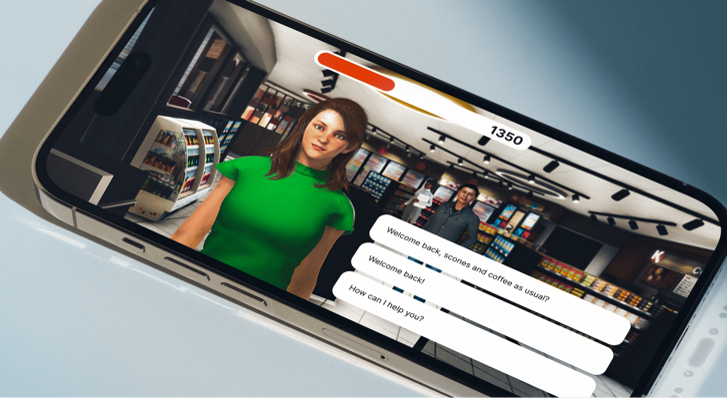
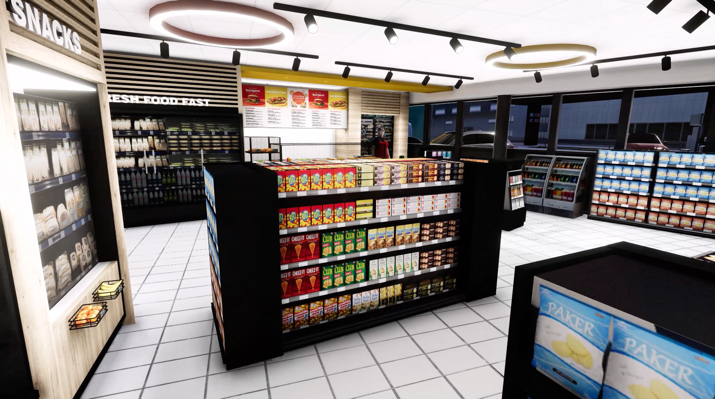
What began as a European pilot in 2018 became the foundation for how Circle K develops its frontline:
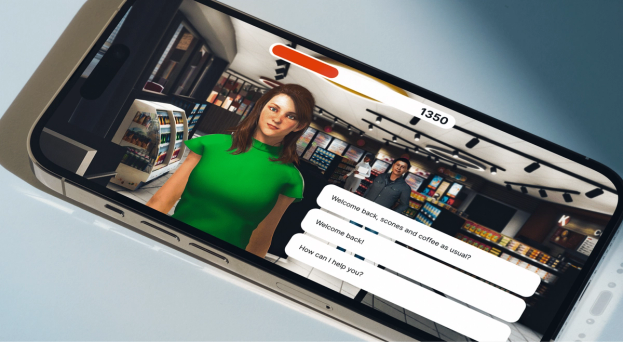
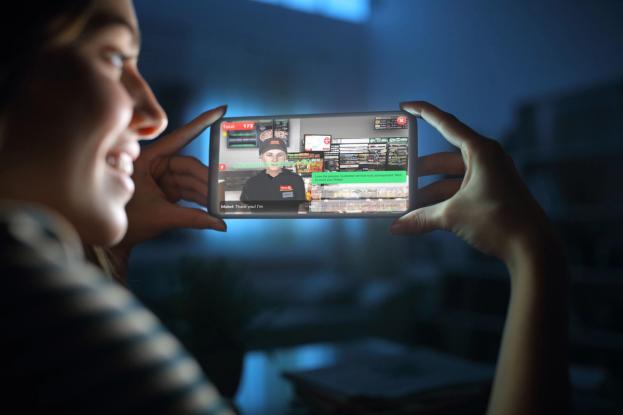
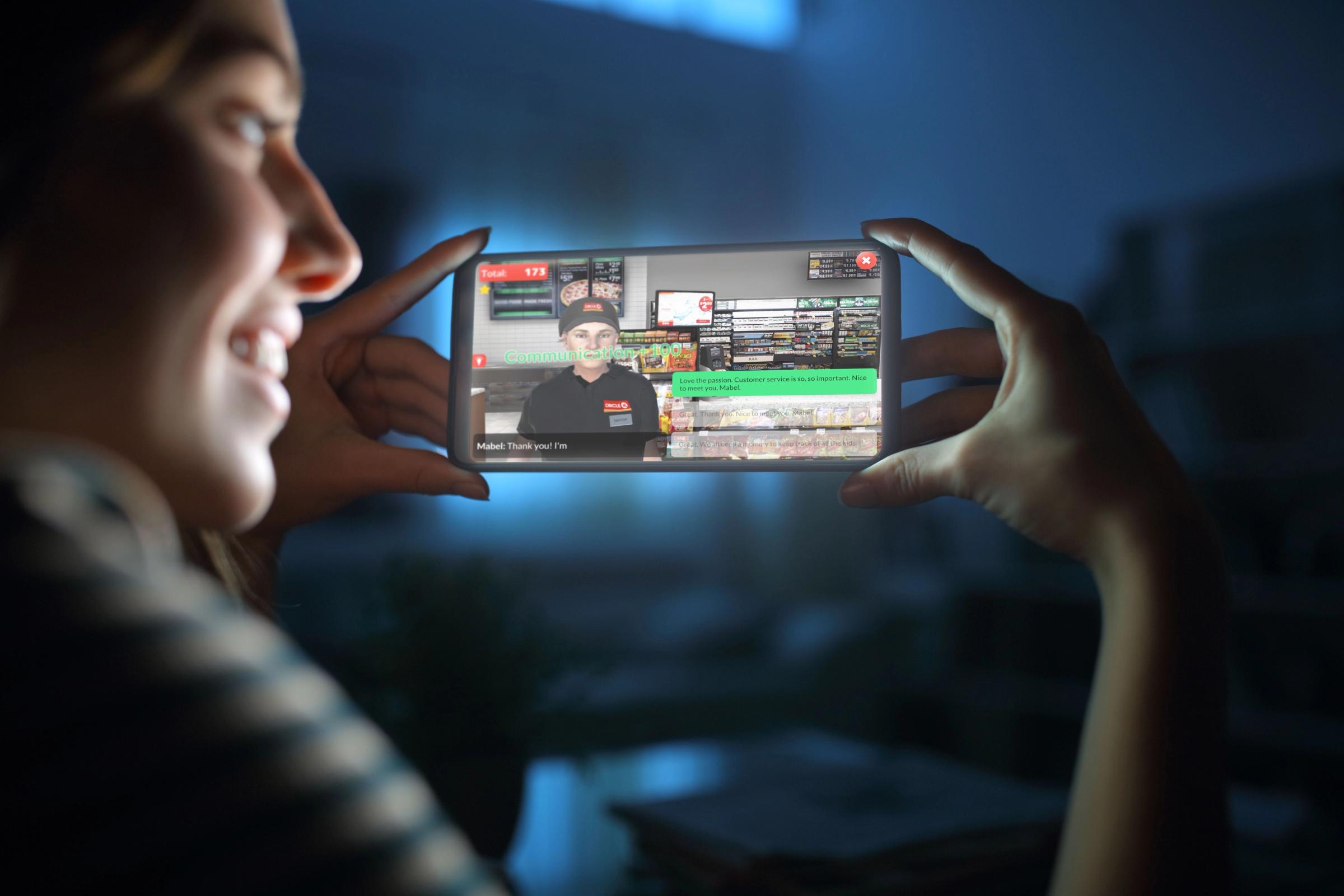
- Gamified, mobile-first simulations – Sales Star, Customer Star – where employees practice service and upselling in a virtual Circle K store, localized across nine markets
- High-energy launches, including "Beat the Boss", where the CEO's score was published for employees to try to beat
- Structured journeys combining e-learning, simulation, hands-on activity, and manager check-ins across the full employee lifecycle
- A shared portal giving store, district, and regional managers visibility into progress
Simulation scores are deliberately kept separate from formal evaluation. Employees can retry as many times as they need, and keep experimenting after they pass – making real mistakes in practice rather than in front of a customer.
The same platform proved itself under pressure. When lockdowns began in March 2020 and Circle K's stores stayed open as essential services, custom protocol training went live in nine languages four days after the first conversation.
The results
Real results from their training journey
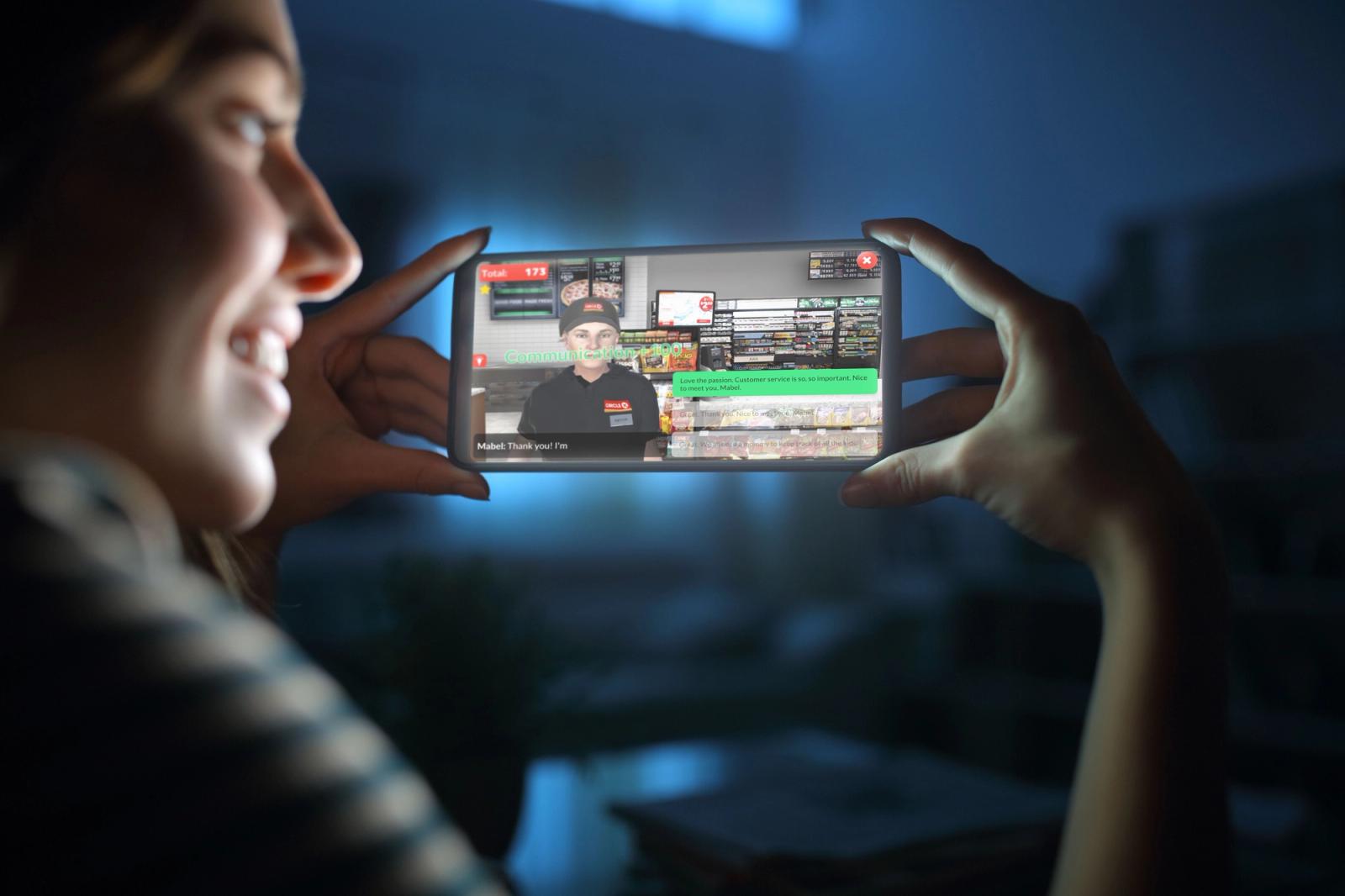
Eight years in, the results show up where frontline training is supposed to: in safer stores, stronger customer interactions, and employees who feel ready for the shift.
- 85,000 associates trained globally, including 65,000+ in North America
- 85% of staff said the training made them better at their jobs, against a 70% target
- Average basket size up and turnover down across participating stores
- 80,000+ training sessions logged in under two months during the COVID rollout, with average knowledge scores improving 87% from first to last playthrough
- A substantial reduction in slips, trips, and falls after a targeted safety simulation
- Majority of leadership learners reported increased agreement with "I feel comfortable doing my job"
"At the end of the day, what we care about is facilitating learning. It doesn't matter how many simulation attempts it takes to pass; what matters is that they leave the learning experience ready to do the work."
what's next
Learning in small bites
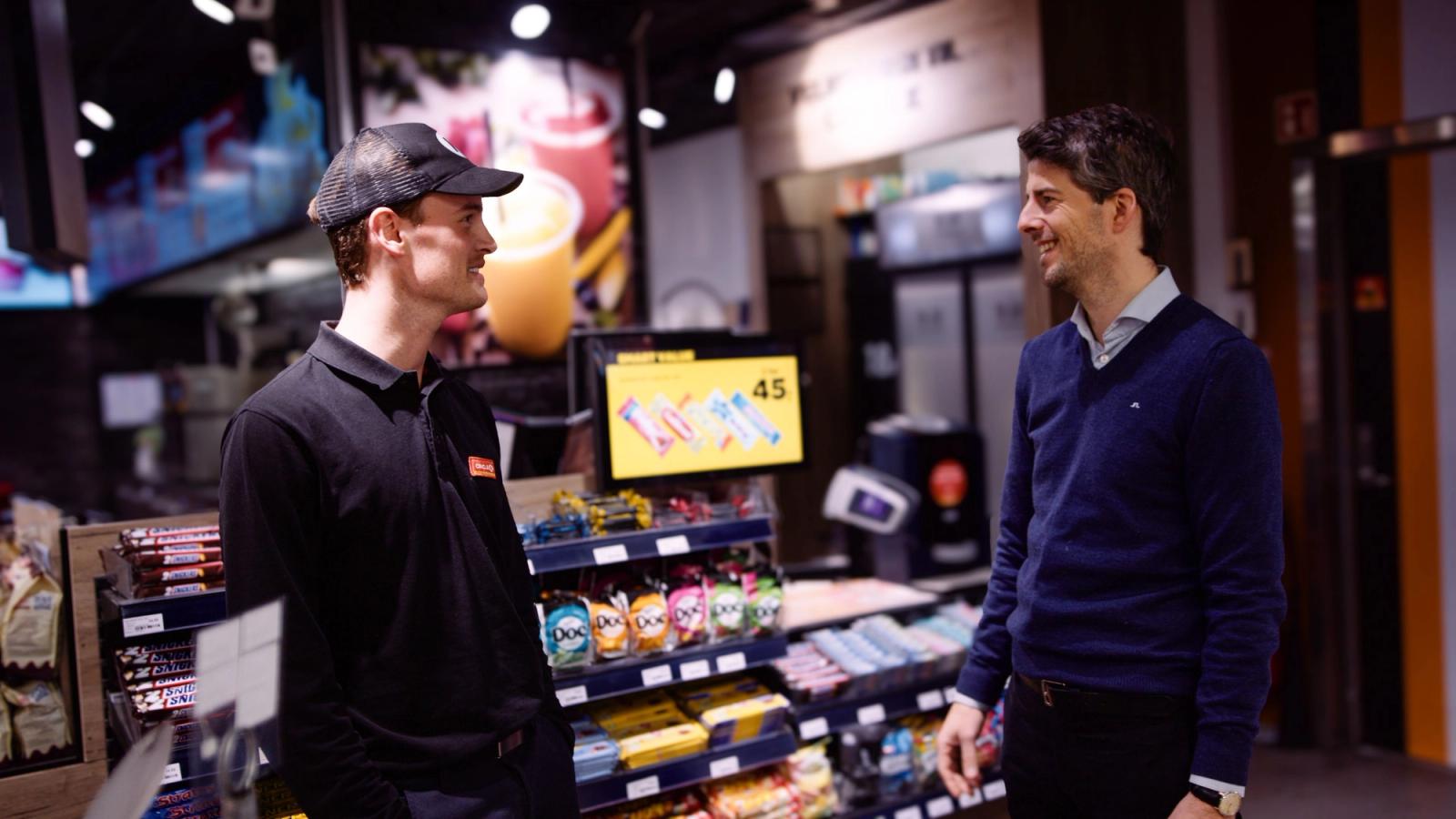
Circle K is now adapting its learning strategy to how employees actually look for information: in shorter, more immediate, and more contextual ways.
Sue noted that learning now happens in "small" bites, whether employees are quickly watching a video or asking an AI assistant for the information they need.
This shift is shaping Circle K's exploration of AI-enabled and conversational learning, toward realistic customer simulations where employees practice conversations with AI in ways that closely mirror what happens in actual store interactions.
"Learning is becoming less about completing orientation or working through a training program and more about helping employees learn quickly, when they need it, and to the point."
Other Case Studies
More chapters from Circle K
A partnership that's evolved over eight years.