Inspiring Inclusivity in the Workplace through the lens of a Tech Scale-Up
Inspiring Inclusivity in the Workplace through the lens of a Tech Scale-Up
One of the most exhilarating aspects of working in a scale-up is building the workforce talent pool at a fast pace, recruiting and onboarding as the company hits its targets and moves onto the next exciting phases of growth. At Attensi, we often describe this journey as being on board a “rocket ship”.The analogy feels apt when you consider the growth trajectory:nnual growth of 45% over the past three years.

As HR professionals, your ability to help attract and retain talent is fundamentally important to the success of a scale-up. Get it right and you continue to scale with the necessary quality, pace and desired company culture. Get it wrong and you can disrupt the momentum as well as the working environment.
When you are scaling-up the pace and volume of recruitment has the potential to change the landscape of the workforce rather quickly at times, which means you have to be mindful to ensure a nurturing, inclusive and supportive environment where everyone feels valued and empowered to grow to become exceptional.
This International Women’s Day we spoke to Claire Brawn, People Director at Attensi, Rasmus Arrousell, People Director at Attensi, and guest expert Kristine Kotte, Lecture Speaker and Social Sustainability Advisor (Master's Degree in Gender Studies) about some of the challenges that companies and specifically scale-ups need to address to build a company culture that inspires inclusivity.
How do you inspire inclusivity in the workplace?
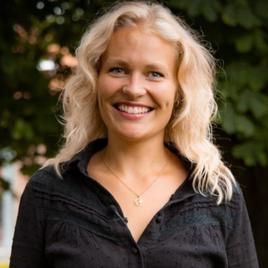
"In order to be an inclusive workplace it's important to work with a combination of structural and cultural measures.
"Examples of structural measures are all the things an employer can do to facilitate inclusion such as policies and routines for equal pay, inclusive recruitment, parental leave, work-life-balance, reporting system, and equal access to career-enhancing projects.
"Culture is what happens in practice. For instance, are the inclusive recruitment processes followed, or is time pressure usually an obstacle? Are all employees aware of the reporting system for anything they feel is inappropriate or not proper conduct? What is the level of trust in the system?
A lot of these measures start with the leadership, so making sure leaders are equipped and educated on topics of diversity is a good place to start,” says Kristine Kotte.
Claire Brawn continues, “In a scale-up where staff numbers can change very quickly and balances can temporarily shift - the culture of inclusivity is an extremely important element. The foundations of inclusivity need to be strong in-order-to build a long-term company culture that is inclusive from its core.
"This includes social activities as well as the working environment. We want everyone to feel included and for all voices to be heard and respected. We need to constantly look at the structural measures we have in place to ensure we areproviding the right mechanisms to achieve our inclusivity goals.”
And Rasmus adds, “As Kristine highlights, leadership is a great place to start – but of course - the culture of inclusivity also needs to filter through every layer of the organization. This combination of culture, structures and processesis a constant balancing exerciseto achieve an inclusive environment in which everyone has equal opportunity to thrive.”
Are quotas a blunt instrument when you are trying to achieve an inclusive work environment?
“When quotas are implemented, it is in response to a stagnant development. For instance - the new legislation to ensure gender balance in Norwegian boards is a response to a flat development over the past 20 years. Quotas may not be the most efficient tool to ensure an inclusive environment. Rather, it is a tool to kick-start a change that will lead to gender balance, and better inclusion down the road,” Kristine says.
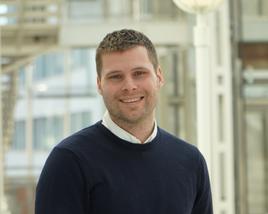
“You have to go deeper than simple math's. If you achieve your quota, have you genuinely implemented a culture of inclusivity?
"Ultimately, you are always looking for the best candidate for the job. If you sway from that just to meet a quota it is a slippery slope. Working on ways to attract and retain a diverse candidate pool to your opportunities is a more pro-active way to build an inclusive work environment. That is one of the great advantages of being part of a scale-up.
"The opportunity to join an organization at such an exciting time when you can help to shape something special together is powerful. Building an inclusive environment where every voice matters is a big driver. At Attensi it helps us to attract talented individuals who share these values,” Rasmus adds.
Claire continues, “Where quotas have been used as a blunt instrument you see the negative impact. People feel that they cannot apply for a promotion because the numbers aren’t in their demographic favor. They start to look elsewhere. A meritocratic atmosphere where people know they can celebrate every achievement, every win, every job offer and every promotion because it has been won fairly is important.”
What do we mean when we talk about inclusivity for women? Can it mean different things in different sectors?
It's important to acknowledge that women are not a homogenous group. Women of ethnic minority backgrounds, with disabilities, or women of the LGBTQI+ community may experience more barriers in the workforce than a white, highly educated majority woman.
Yes, different sectors have different challenges. A few examples:
- Women in STEM might face the challenge of being outnumbered, and thus face barriers such as unconscious bias, in terms of getting underestimated for example.
- Women in law and consultancy might face long hours, and a competitive partner-track. Where men on the same level more often have a partner at home to support domestic tasks and child-care, women are statistically less often in the same position, plus they are the ones carrying the child(ren).
- Female leaders in male-dominated industries might have to adopt a more masculine leadership style than is natural to them in order to get respect.
- Female founders receive less than 1 percent of venture capital, partly due to a male-dominated investor landscape.
“We have more work to do as a society to address inequalities, especially in sections of the workforce that are less diverse than others. We know as a scale-up in tech that although things are definitely improving greatly, we haven’t come this far to only get this far.
"International women’s day reminds us that this work is never done. How can we remove barriers? What lessons can we learn from failures? What lessons can we learn from each other with best practice examples from across the globe and across sectors? Whether you are a start-up, scale-up or a long-established organization, we must continue to ask ourselves these difficult questions to continue our progress in inspiring inclusivity,” Rasmus says.
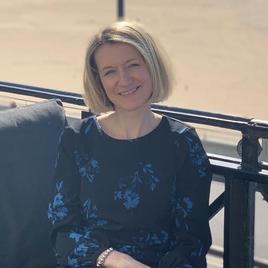
“It is important to look at how far we have come and to ensure that we push hard for more momentum.
"I really believe that Covid was a great example of showing just how quickly we can make really impactful change. Hybrid working is just one example of an ambitious change that happened quickly due to Covid and that has opened doors for a large section of the workforce including many working mothers.
"We must be open to breaking the mold in-order-to ensure that we are not obstructing sections of the talent pool from joining, rejoining or climbing the ladder in the workforce.” Claire adds.
How do you measure your success?
“It's important to have enough and accurate data to know what measures to take. The Norwegian tech company Equality Check is an example of a good provider of tools and analysis.
"I would also recommend to include and invite men into discussions around gender balance, equality and diversity. After all, many men hold leadership roles, and many men may not be as outspoken about the topic, but they are important supporters, mentors and sponsors,” Kristine says.
Claire adds, “We constantly measure our success with the understanding that hiring large volumes of people at pace at certain points in our growth trajectory can skew the figures in both directions. We have to ensure that our culture feeds into our long-term goals of inclusivity.”
Our figures illustrate this: x,y,z
“We measure our success with numbers of course and, as Claire mentioned, we are proud to showcase a strong female representation for a fast-growing tech company.
"However, we must also measure with feedback, conversations with our colleagues, open dialogue, participation rates in work projects and social events and other less black and white measurements than numbers. This is a complex issue, but we must hold ourselves accountable by measuring the success of our efforts. It is vital that we scale-up with inclusivity at the heart of everything we do.” Rasmus finishes.