

INSIGHTS
How you can use metrics to champion your learning and development
When you undertake a large project or implement new processes, they tend to come with continuous evaluation and improvement.
Your learning and development should be no different.
However, according to the Harvard Business review, 75% of managers across 50 organisations surveyed said they were dissatisfied with their company’s learning and development1.
Without effective metrics, how do you know the impact your learning and development is having on your business? Without that knowledge, how can you improve things in the future?
At Attensi, we believe in creating impactful, sustainable and long-term results through practical simulation training. Regardless of your preferred method of delivering training, if you’re not monitoring the performance, you could be missing out on key opportunities to create real cultural impact in your business.
"Not everything that counts can be counted, but everything that can be counted counts."
Albert Einstein
Why you need to use evaluation and metrics in your learning and development:
There’s no point investing in thorough employee training if it’s not going to deliver what you need. And we’re not just talking about skills. There’s behaviour and wider company culture to consider too.
As humans, we need to hear regular feedback. It goes a long way to help our productivity.
If the session delivers specific information but it doesn’t speak directly to your team, it’s not going to deliver the long-term change in behaviour you’re looking for.
Ultimately in business, you need to see the return on your investment. If your L & D programme isn’t creating a marked improvement on your bottom line, you need to get to the bottom of it.
Be careful. ROI isn’t always the most accurate unit of measurement when it comes to the success of your training. For example, a relatively low cost learning intervention as part of a large overall project could be superficially impressive, but not give you a true picture of the overall impact of the investment. Cultural change can’t always be measured by financial gain.
The very definition of insanity is doing the same thing over and over, while expecting a different outcome. By using evaluations on your training, you can identify any knowledge gaps and ensure appropriate learning objectives are covered in any future training.
Similarly, if there are aspects of the training that weren’t engaging or particularly successful, you can adjust these to meet your learning objectives at a later date.
Success looks different in every business. Depending on the training you’re delivering, you’ll want to consider using different metrics to evaluate the success.
Here’s a selection we believe will help you to understand the effectiveness of your current learning and development.
In any practical workplace, measuring skills attainment is relatively simple. You’ll need to gather data before and after training to see whether the information’s been retained and whether the training has been successful.
Think about this in a sports context . You might take the time of a 100m sprinter before a six week training camp. In order to measure the attainment of skills, you’d need to time the same distance again and compare results. This is an easy way to measure improvement as a direct consequence of your training. That’s why understanding where your staff is at in terms of skills and knowledge prior to the training is crucial to understand the impact afterward.
Seeing your training in action is a clear way of knowing whether you’ve made a difference to workplace culture. There are several ways you can measure this depending on the particular skill or behaviour you’re trying to quantify.
Some examples include:
- Mystery shoppers
- Rating systems
- External evaluators
It’s been proven many times that as humans, we like setting goals. They help to keep us motivated and change the way we align our energy with a project.
Setting individual or team goals as part of your employee learning and development not only improves the skills of your teams, but potentially their wellbeing too.
Goal setting is even used in some current psychotherapies to treat common mental health conditions such as depression2. These include interpersonal psychotherapy (ITP), cognitive behavioral therapy (CBT) and problem-solving therapy (PST).
You can assess individual or team behaviour change through a series of reviews or assessments depending on the skills you’re measuring.
According to The Independent, in 2020, more than half the workforce in the UK were looking for a new job3. When employees become bored and unchallenged by their work, it can be a contributing factor to their potential job search. Providing a good quality learning and development programme often has a direct impact on your staff retention rates.
If you want to hold on to good people, they need to feel valued and like their careers are headed somewhere. That’s why organisations can use their retention rates as a metric for their L&D success, in addition to the internal progress of their staff, whether that be personal development or career progression.
Do you need an evaluation model?
A number of organisations will use an evaluation model for their learning and development as a means of introducing consistency. If you evaluate one session one way and another in a different way, it’s more difficult to know which has been truly successful.
We’ve outlined four examples of evaluation models that have been used by organisations to measure the success of their learning and development.
You may want to implement one, or you might prefer to build your own model using the metrics that are relevant to your own development programs and modules.
Did you know 72% of people feel their performance would improve if they were given constructive, corrective feedback by their managers?
68% of employees who receive feedback and feel recognized in their role feel more fulfilled in their jobs4.
Using evaluations and feedback can directly impact your staff turnover as an organisation. Some reported up to a 15% lower turnover rate.
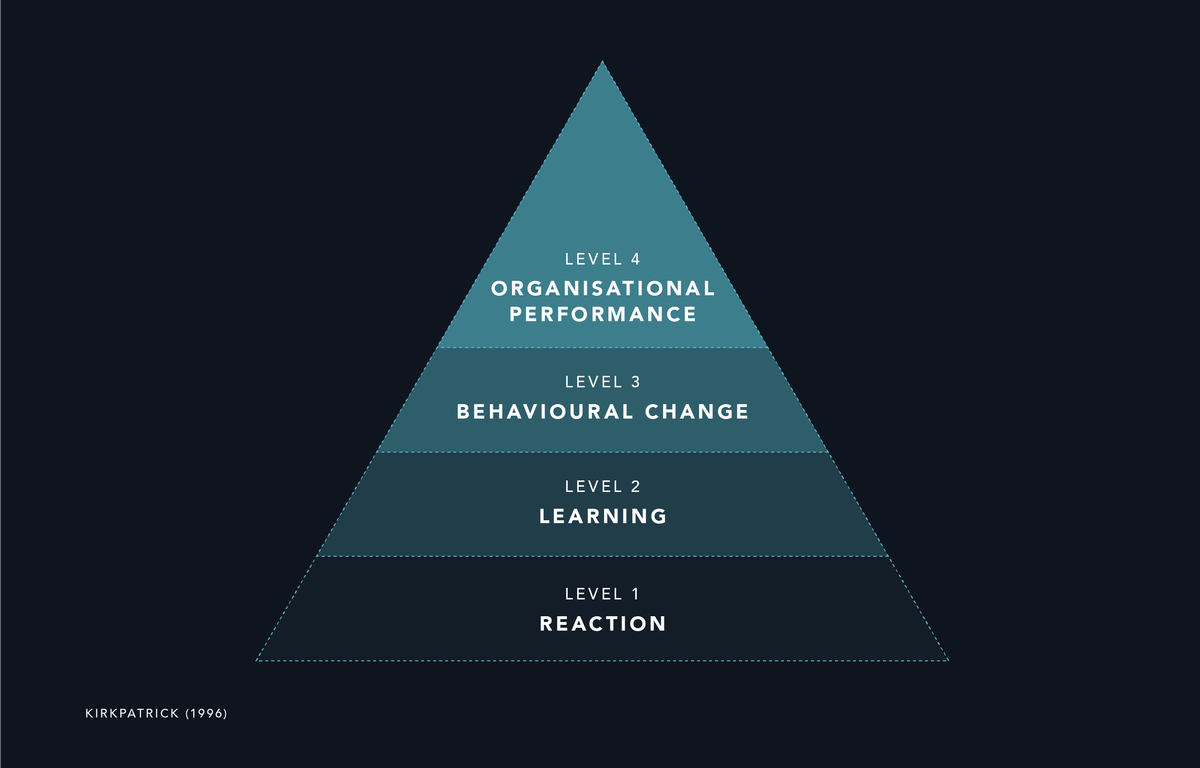
The Kirkpatrick model
Originally conceived in the 1950’s, the Kirkpatrick model focuses on four central evaluation points:
- Reactions: how your employees felt about the particular session.
- Learning: the principles and facts that have been absorbed throughout the session.
- Behavior: practical, user-based learning gained throughout the session.
- Results: changes to the organisation as a direct result of the session.
This particular model is a useful tool if you want to gain feedback from the participants of a training session as they can give you detailed accounts of what they’ve learnt.
However, critics of Kirkpatrick’s model argue that many of the answers to the above questions are self-reported and can’t always be relied upon as valuable metrics.
The Phillips’ Return On Investment Model took the idea and ran with it – more about this shortly.
Brinkerhoff success case method
This method identifies the most and least successful evaluations and analyses them in detail. The principle is that it’s no use to your organisation to examine the average evaluation – by looking at two extremes, you can clearly see what is working particularly well and what’s not working successfully.
From here, organisations can create a ‘case study’ around the results and answer the four following questions:
- What is really happening?
- What results, if any, is the program helping to produce?
- What is the value of the results?
- How could the initiative be improved?
You can then use these answers to consult with stakeholders, develop the training further and identify any gaps in the material that needs to be filled.
Philips’ return on investment model
Philips felt that the Kirkpatrick model was missing something. With this in mind, he added a fifth element that examined the impact of learning and development on an organisation’s ROI as opposed to the ROE (return on expectations) from Kirkpatrick.
The fifth and final ROI element allows businesses to use cost-benefit analysis to see the value of any particular training program. You’ll be able to see clearly if the training has produced any measurable returns or losses and exactly what they are.
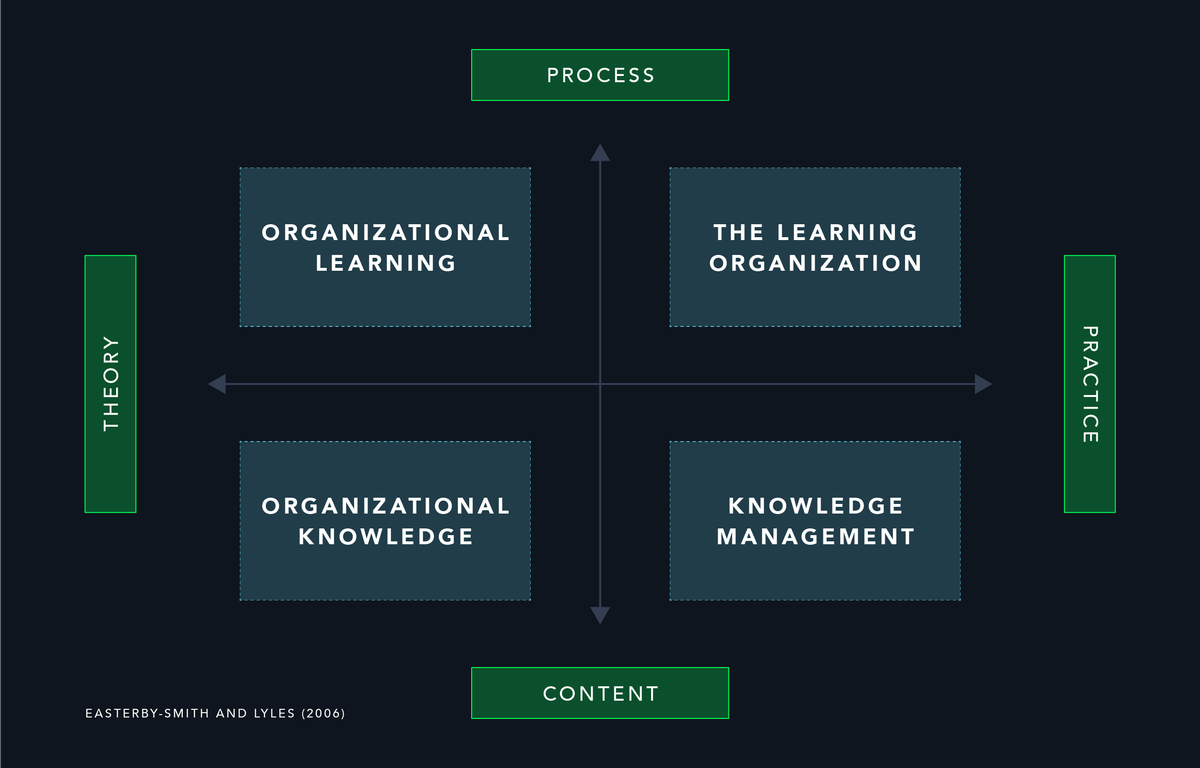
Easterby-Smith model
Introduced in the 1990’s, the Easterby-Smith model also used four main principles to evaluate learning. This method was common during larger face-to-face events and has since lost popularity since the rise of e-learning and simulation training.
Can any of these principles be applied to your learning and development?
Talk to Attensi to see how you can successfully evaluate your simulation training.
Did the training work?
Did it deliver the impact required?
How long did the training take?
What were the consistency and compliance requirements?
How were the trainers?
How was the content and the other course arrangements?
This meant using the evaluation as a means to continue the learning after the course was over.
The Attensi PORTAL
When you’re running a large scale training operation, it’s critical you’re able to keep track of everything that’s going on. You may have several different departments taking part in several training events simultaneously. That’s why we developed our PORTAL solution.
When you use Attensi PORTAL, you’ll be able to:
- Access, manage and track all your learning and training content in one easy-to-use place
- Integrate your existing training methods with your state-of-the-art Attensi solutions
- Monitor the progress of your teams and see how they’re delivering on KPIs
- Host your existing videos, manuals and documents alongside your Attensi solutions
- Give your teams a personalized experience by creating and delivering unique follow up evaluations and reports
As humans, we need to give and receive feedback. It’s what helps us to develop ourselves and ultimately, our businesses and organisations.
To arrange your demo of our Attensi solutions including our PORTAL, please contact us today.
Are you ready to level up your training?



Sources
- Where Companies Go Wrong with Learning and Development, hbr.org/2019/10/where-companies-go-wrong-with-learning-and-development
- Effective Goal Setting Could Help People with Depression, goodtherapy.org/blog/effective-goal-setting-could-help-people-with-depression-0105171
- More than half of UK workers want to find a new job, survey finds, independent.co.uk/news/business/news/uk-workers-new-job-satisfaction-investors-in-people-a9272191.html
- The Importance of Regular Feedback, achievers.com/blog/the-importance-of-regular-feedback